How I deployed a full-stack app in a weekend, armed with nothing but Claude AI and the audacity of a former Myspace coder.
By Sophie Clifton-Tucker
The problem: herding cats (AKA my friends)
It's 11pm on a Wednesday and I'm 47 messages deep into a WhatsApp group called 'Sarah's Baby Shower 2026'. Someone has sent a poll. Someone else has ignored the poll and sent their availability in paragraph form. A third person has replied "I'm free whenever!" which, as we all know, means absolutely nothing.
I close WhatsApp. I open it again immediately, with the same gusto as when I check the fridge of an evening hoping new food has materialised.
This dance continues for three weeks. By the end, I've aged approximately seven years and we STILL don't have a date.
Sound familiar?
I thought so.
Here's the thing about being a chronic problem-solver with the technical skills of a 2002 teenager: you have lots of ideas and absolutely no business attempting most of them.
But this time felt different; I'd been hearing whispers about AI coding assistants that could turn plain English into actual, working code. "Just tell it what you want," they said. "It's like magic," they said.
Reader, I was skeptical.
My initial foray into 'coding' involved CSS-ing my MySpace page to have a black background with pink sparkly text (iconic, if I do say so myself), and building questionable fansites on Geocities and Freewebs. I peaked at making text blink. Since then, I've stuck many limbs in many pies for my various business ventures, creating websites on platforms like Wix and Wordpress, my former Neopets days a mere whisper as I tinkered with the HTML, feeling like some sort of Rain Man equivalent as I got snow pixels to successfully cascade over my profile page.
After many years, and many lost braincells due to my two children who have taken the bulk of my grey matter with them, I downloaded Claude Code, because apparently I enjoy humbling myself.
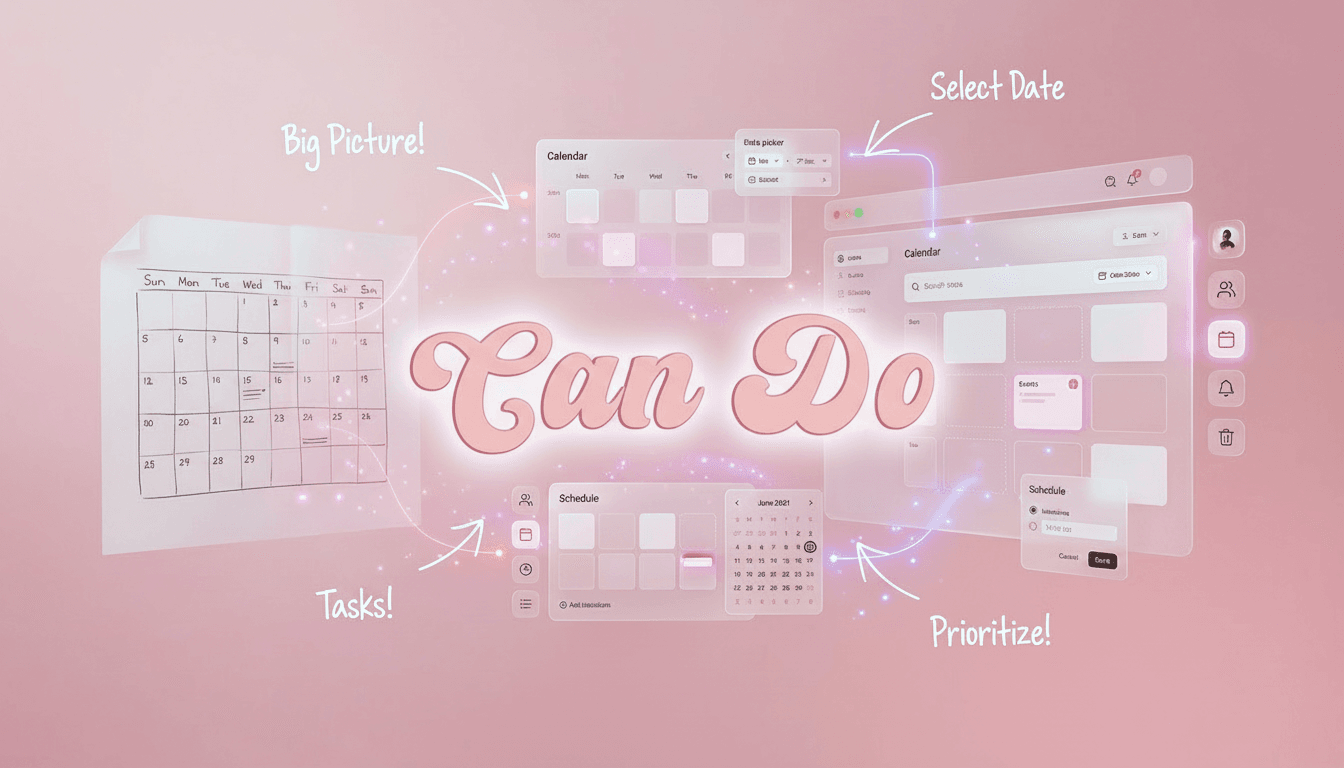
CanDo

"Can do, you?"
Cando.you, a shared calendar tool that does one thing simply: helps groups find dates that work for everyone with no sign-up, no account creation, no 47-step onboarding flow asking for your mother's maiden name or the street you grew up on.
You create an event, share the link, people click dates they're free, and the app shows you where everyone overlaps. Perhaps not revolutionary, but if you're anything like my friend group, absolutely bloody necessary.
Here's how it works:
Create an event with a title and your name
Select the dates you're available for said event
Share the link with your chaotic friends
See matches highlighted in green when dates align
Real-time updates so you can watch responses roll in
The build: A play in several anxious acts
Act 1: The audacity of "just make me an app"
My first prompt to Claude was something along the lines of:
"I want to build a shared calendar app where people can vote on dates. Make it pink and pretty. I have no idea what I'm doing."
And here's where things got interesting.

Instead of laughing me out of the terminal, Claude started... building. It chose Next.js (a React framework, for the non-nerds), set up a project structure, and began writing actual code.
I watched like a Victorian child seeing electricity for the first time.
Within about 20 minutes, I had a working prototype running on my laptop. It was ugly. It was basic. But baby it was born.
I may have screamed.
Act 2: "Make it pretty" (the fun part)
This is where my years of obsessing over aesthetics finally paid off.

I didn't need to know CSS syntax, I just needed opinions - and oh, do I have opinions.
"Make the background a soft pink. Not Barbie pink, more like... slightly blushing ghost."
"The font should be light and airy. Legible. Not Times New Roman-y."
"Can we make the buttons rounder? They look aggressive."
Claude translated my unhinged briefs into actual code changes. We went through probably 15 iterations of the logo alone (I insisted on a curly 'C' that matched my specific vision), and Claude patiently generated a plethora of examples.

The colour palette evolved through at least 8 versions. At one point I asked for 'fuchsia but make it soothing, like a fancy candle' and Claude somehow understood. Claude always understands.
Is it perfect? No. But I'll be damned if I was going to let this project rot on The Heap of Unfinished Ideas™. Sometimes, 'done' is good enough. There'll be time for nitpicking later on.
Act 3: The database situation (where I nearly lost my mind)
Here's where I'll admit things got spicy.
The app needed to actually remember things. Like, when someone selects dates, those dates need to still exist when they refresh the page.
Claude set up something called Upstash Redis. This involved:
1. Creating an account on Upstash
2. Copying some secret keys
3. Pasting them into a file called `.env.local`
Did I understand what was happening? Absolutely not. Did it work? Somehow, yes.

Act 4: Going live
Getting the app onto the actual internet involved:
1. Pushing to GitHub - Claude walked me through this and I complied like a particularly confused golden retriever. `git add`, `git commit`, `git push`. I nodded and typed, wagging my tail.
2. Deploying to Vercel - This is apparently where Next.js apps like to live. I connected my GitHub, gave it a few tippity taps, and suddenly my app had a real URL.
3. Custom domain - I bought cando.you from Porkbun (excellent name for a company, 10/10) and pointed it at my Vercel deployment.
The DNS propagation took about 5 minutes, during which I refreshed the page approximately 4,000 times.
And then... it worked. *Angels sing*
Details, details, details
Once the basics worked, I became completely unhinged with feature requests:
The rotating footer messages:
Instead of a boring "Made by Sophie", I asked for random funny messages that change on refresh:
- For when "I'm free whenever" means absolutely nothing 🤷♀️
- "Because herding cats is easier than herding friends"

The "Dates Saved!" toast:
When you save your dates, a little notification pops up. It's completely unnecessary and I love it deeply.
The social proof counter:
The homepage shows how many events have been created. It's currently showing real data, which means real humans are using this thing I made while wearing pyjamas.
What I learned
1. You don't need to understand everything to build something.
I still couldn't explain what half the code does. But I know what it achieves, and I could direct the changes I wanted. That's a different kind of skill. I consider myself more the creative director than the engineer.
2. AI doesn't replace taste.
Claude could write perfect code, but it couldn't know I wanted "slightly blushing ghost" pink. The vision, the pickiness, the meltdowns, those were all me. AI is a remarkably capable intern, but not a replacement for having opinions.
3. The barrier to building is genuinely lower now.
I made a full-stack web application. With a database. That real people can use. Two years ago, this would have required either months of learning or thousands of pounds hiring a developer. (I can feel my skin burning from the gaze of a thousand developers glaring at this article with disdain.)
4. Deployment is still fiddly.
Even with AI help, there were moments of genuine confusion. Environment variables, DNS records, and favicon formats all caused mini-meltdowns. But the mini-meltdowns were solvable, and usually within minutes.
The technical bits (for those who care)
For the developers reading this wondering what was actually built:
- Framework: Next.js 16 (App Router)
- Database: Upstash Redis
- Styling: Tailwind CSS
- Hosting: Vercel
- Domain: Porkbun
- Analytics: Vercel Analytics
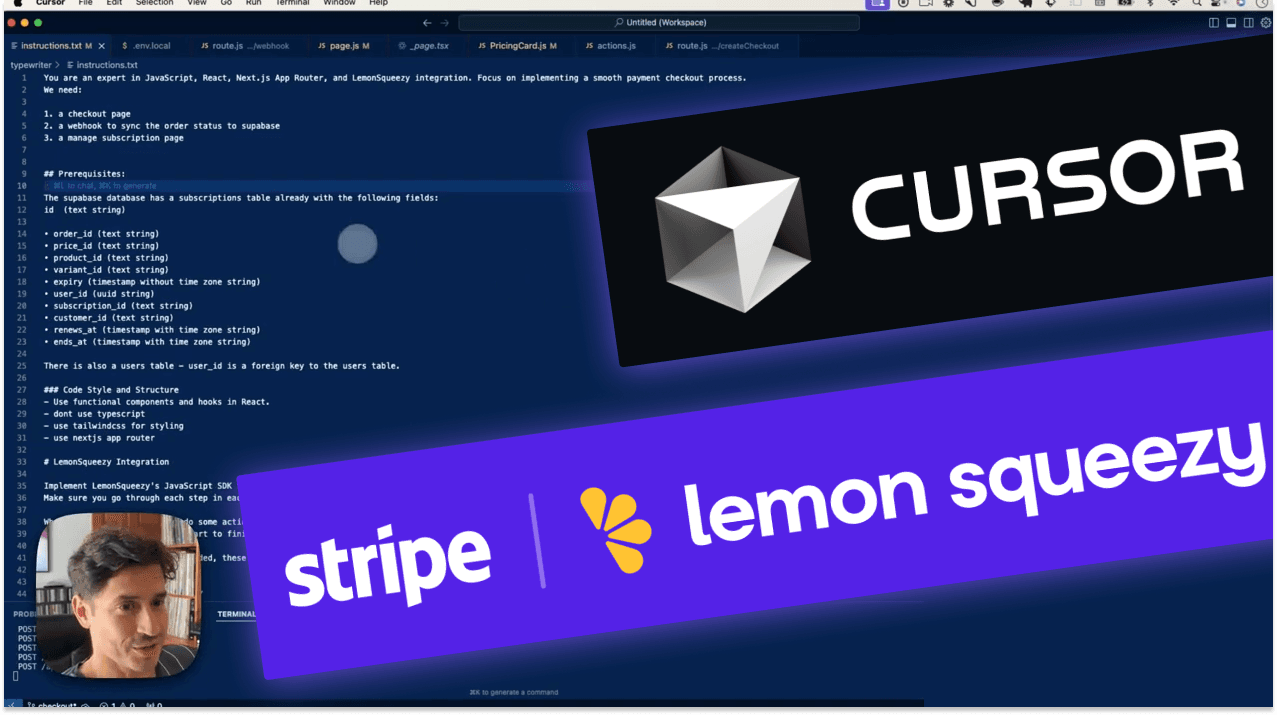
- AI Assistant: Claude Code (Claude Opus 4)
The entire codebase is a handful of files. The calendar component is probably the most complex bit, handling date selection, multi-participant display, and colour-coding for matches.

Would I do it again?
Already planning my next project, actually.
The whole experience fundamentally changed how I think about building things. I'm no longer limited by what I can technically execute - I'm only limited by what I can imagine and articulate.
For other non-technical people thinking about building something: do it. Start messy. Describe what you want in plain English. Expect frustration. Embrace the weird pride that comes from seeing something you made exist in the world.
And if you need to organise a group event, you know where to find me.
---
Try it: cando.you
Find me: LinkedIn | Instagram | X
---
Sophie Clifton-Tucker is a writer, journalist, and accidental app developer based in Gibraltar. Her previous technical achievements include a truly magnificent MySpace layout (RIP) and successfully connecting to WiFi on the first try (once).

 Buy me a coffee