That might seem like an obvious observation today, but with the painstaking hands-on work that went into design in the early 20th century, it was revolutionary. And it set the stage for everything that came after.
Design History and the Rise of Visual Propaganda
Old advertisements are kind of like a short essay, a picture book, and a pitch all rolled into one. From a modern design perspective, there’s a lot of redundancy. For example, look at this ad for a Milburn Light Electric, a car produced from 1915 to 1923. The ad asserts that the Milburn “has long sweeping lines and is strikingly beautiful by comparison with any other car of its type” right beneath an illustration of the Milburn! It’s almost like the drawing is just there to attract the eye so the copy can win you over.
An iconic World War II era propaganda ad like Rosie the Riveter is almost the exact opposite. Nothing is wasted. The image speaks for itself. The text merely complements the image and adds a slogan. It’s easy to draw a line straight from Rosie to the famous Shepard Fairey “Hope” poster made for the 2008 Obama campaign.
In many ways, the 1940s is when graphic design came into its own. Images became bold, modern and designed for maximum emotional impact. In part, this was driven by the need for effective, emotionally impactful propaganda. Getting an entire country to go from the business of everyday life to mobilizing to defeat an enemy is a daunting task, and an attractive illustration followed by a lot of small text wasn’t going to do it. Artists and graphic designers went beyond Dwiggins “horse-sense,” and learned to create designs that were confrontational, inspiring, and even jarring.
 How the Advertising Boom Changed Design
Love it or hate it, you can’t understand the history of graphic design without grasping the changes in American culture in the 1950s. With much of the rest of the world rebuilding from the second World War, America was in a position of global power and prosperity, and businesses took note, giving rise to the advertising boom.
Most people associate the ad boom with television, but it extended far beyond that. The modern TV format, structured around advertising emerged, leading to a for-profit model based entirely around selling ads. It was a new form of storytelling around selling desire. Romance, sex appeal, and images of prosperity were used to entice consumers into buying luxury products.
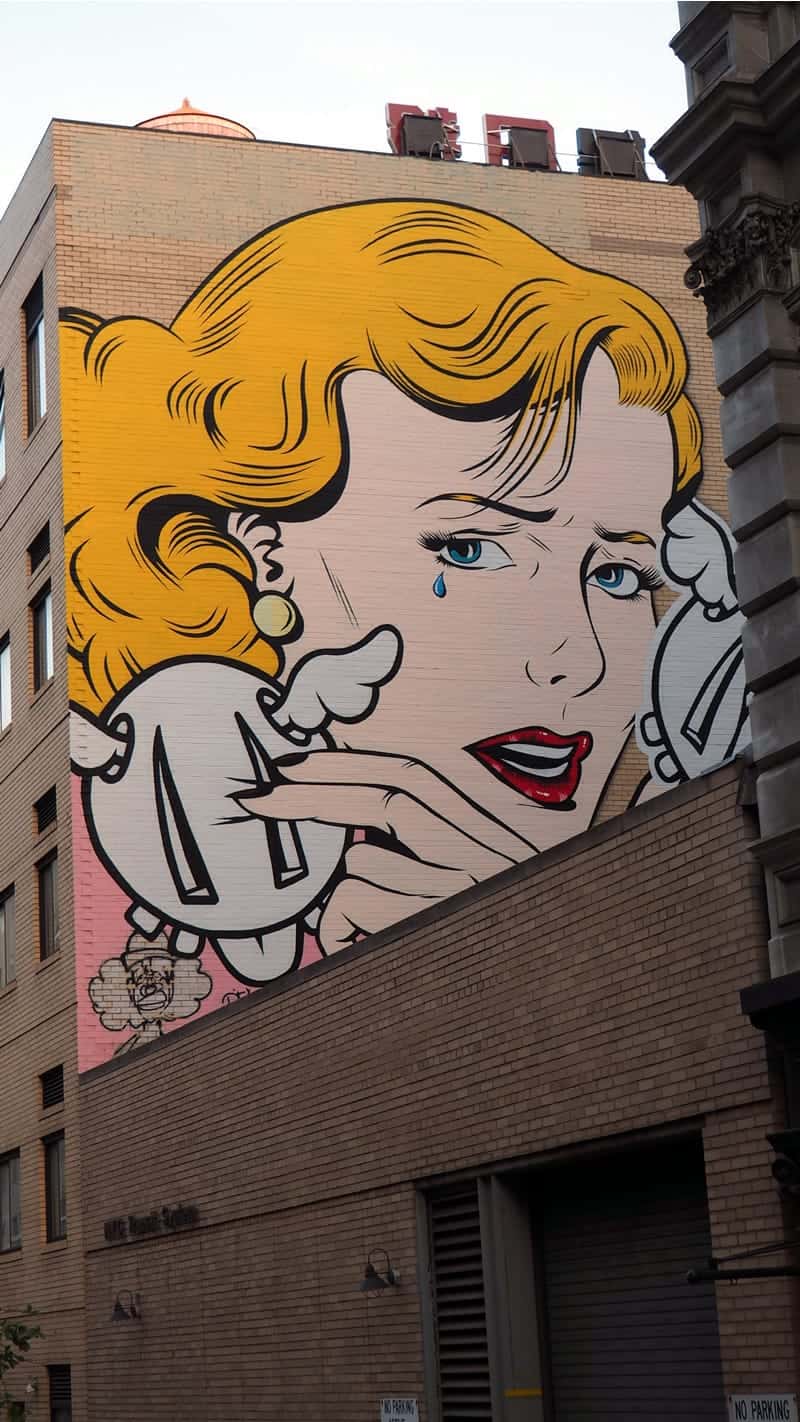
And as Americans became saturated by mass media and surrounded by commodities, traditional lines between fine art and graphic design started to blur with Pop art. Many of the leading figures of the Pop art movement began their careers as graphic designers, including Ed Ruscha and Andy Warhol. Roy Lichtenstein appropriated images from comics and turned them into paintings. Warhol displayed screen prints of celebrities, and even soup cans in galleries.